


The ketogenic diet (keto diet) contains approximately 90-99% of calories from fat and protein and only 1-10% from carbohydrates.Eating this way may provide some benefits for weight loss or reducing the number of epileptic seizures. However, as a new study found, following a keto diet only provides health benefits for a short period of time - 1-2 weeks - after which the negative effects start to occur.
What is the keto diet?
The ketogenic diet (or keto diet for short) is a low-carb, high-fat diet that may have several health benefits.
More than 20 studies have shown that this type of diet can help you lose weight and improve your health.The ketogenic diet may have some benefits for diabetes, brain cancer, epilepsy and Alzheimer's disease.
The ketogenic diet is a low-carb (no more than 1-10%), high-fat diet that has a lot in common with the Atkins and low-carb diets.Following this diet leads to a sharp reduction in carbohydrates and replacing them with fats and proteins.This greatly reduces the body's use of carbohydrates and switches the body to use fat as its main source of energy.If there is little glucose in the body, the liver processes fat into fatty acids and ketone bodies.
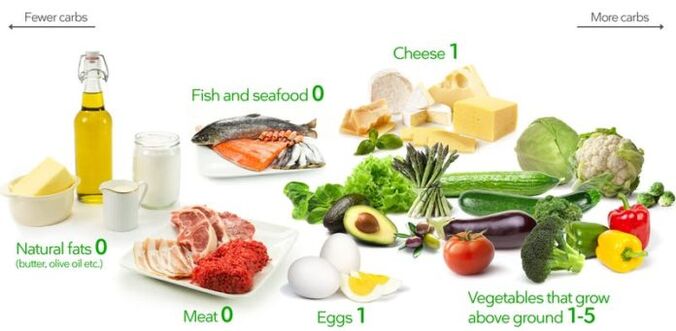
When the amount of ketone bodies in the body increases, ketosis occurs, and the brain begins to use these ketone bodies instead of carbohydrates.When this happens, the body becomes very efficient at burning fat for energy.
A ketogenic diet can significantly reduce blood glucose and insulin levels.This, coupled with the increased amount of ketones, shows some beneficial benefits for the body.
However, the keto diet can be potentially dangerous for people with type 1 diabetes.
Benefits of the keto diet
One study of 63 people created two groups: either a low-fat diet group or a low-carb diet group.The group of people who have a low-fat diet is limited in calories.The study continued for 12 months.
The low-carb group lost more weight, 7.3% of their total body weight, than the low-fat group, which lost 4.5%.The difference was statistically significant at 3 and 6 months, but not at 12 months.At the end of the experiment, there was no weight difference between the groups of people.
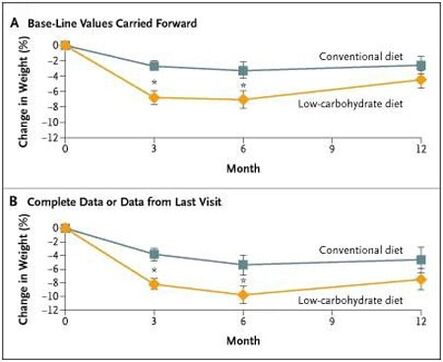
It is worth noting that the low-carb (keto diet) group had increased blood levels of triglycerides and HDL, but other biomarkers were similar between groups.
If we analyze the 23 known clinical studies on humans evaluating the effects of a low-carbohydrate diet (keto diet), we can summarize the general conclusions of these studies.Most studies achieved a statistically significant difference in weight loss (always in favor of the low-carb diet).
There are several other factors to consider:
- A low-carb diet often results in 2-3 times more weight loss than a low-fat diet.In some cases, there is no significant difference.
- In most cases, calories are restricted in the low-fat group, while the low-carb group can eat as much as they want.
- When all subject groups restricted calories, the low-carbohydrate diet still showed greater weight reduction, although this was not always significant.
- There was only one study in which the low-fat diet group lost more weight, although the difference was small (0.5 kg) and not statistically significant.
- In some studies, weight loss is best early on.People then start to regain weight over time and after they come off the keto diet.
- When scientists look at the amount of belly fat (the bad visceral fat), a low-carb diet has a clear advantage in reducing this type of fat.
The two main reasons a low-carb diet (keto diet) is so effective for weight loss are the high protein content of the food and the appetite-suppressing effect of this eating style.This results in a sharp reduction in calorie intake.
Harmful effects of the keto diet
Clinical studies show that the keto diet can improve a person's health in a short period of time (up to 12 months) by reducing the risk of developing type 2 diabetes and, as a result, reducing inflammation caused by fat cells.
A study conducted at Yale University found that the positive and negative effects of diet are related to the behavior of immune cells called gamma delta T cells (γδ T cells), tissue-specific cells that reduce the risk of diabetes and inflammation.
Delta gamma T cells are immune T cells that have a distinctive T cell receptor (TCR) on their surface.Most T cells are αβ (alpha beta) T cells with TCRs consisting of two glycoprotein chains called TCR α (alpha) and β (beta) chains.In contrast, delta gamma (γδ) T cells have TCRs consisting of one γ (gamma) chain and one δ (delta) chain.This group of T cells tends to be less abundant—about 4–10% of all T cells—than αβ T cells, but has the highest abundance in the intestinal mucosa, in a population of lymphocytes known as intraepithelial lymphocytes (IEL).
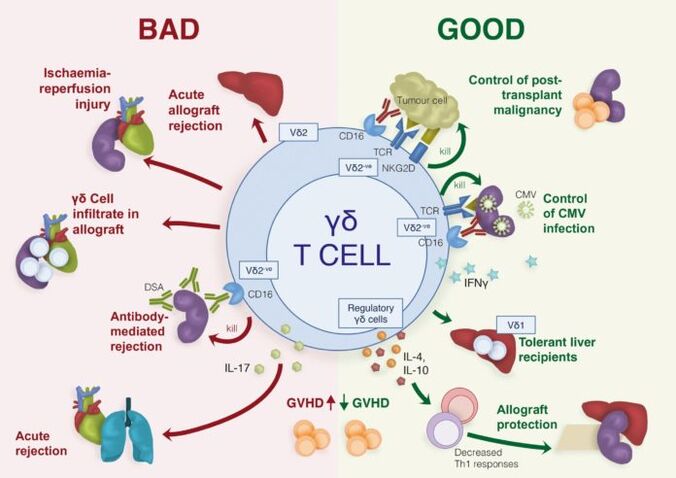
Gamma-delta immune T cells are characterized by several features that place them in the boundaries of the more primitive innate immune system evolutionarily, which provides a rapid response to various pathogens, and the adaptive immune system, where lymphocytes coordinate their actions more slowly.At the same time, (γδ) T cells have the ability to have long-term memory to respond more quickly to pathogens when they are encountered again in the future.
The keto diet leads to an increased presence of immune T cells (γδ) and their reduction in adipose tissue
The keto diet tricks the body into burning fat, said study author Dr Vishwa Deep Dixit of the Yale School of Medicine.When the body's glucose level decreases due to the low carbohydrate content of the food, the body acts as if it is fasting, even though it is not, and starts burning fat instead of carbohydrates.
This causes the body to use β-hydroxybutyrate (beta-hydroxybutyric acid) to produce ATP and reduce inflammation mediated by NLRP3, a cytosolic protein involved in the activation of inflammatory interleukins IL-1b and IL-18.
The process of reducing carbohydrates in food also begins to produce ketone bodies (ketones) as an alternative fuel source.As the body burns off ketone bodies, protective delta gamma T cells spread throughout the body.And the number of these protective immune cells in adipose tissue is dramatically reduced.As γδ T cells in adipose tissue are depleted, the level of inflammation previously contained in these cells begins to increase.Inflammation is known to stimulate the accumulation of fat cells.
Additionally, mice lacking immune γδ T cells show impaired glucose homeostasis, leading to increased blood glucose levels.
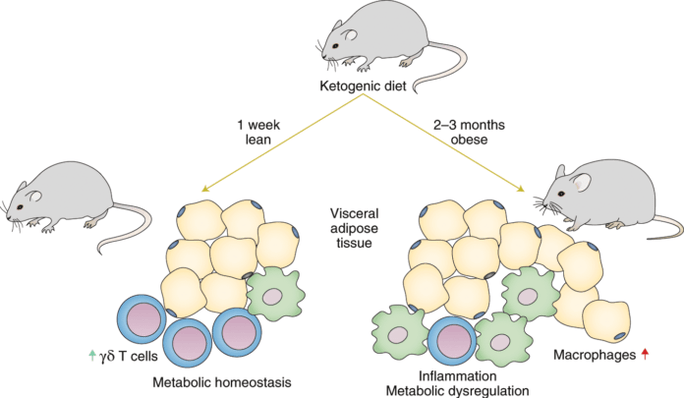
The keto diet reduces the risk of diabetes and inflammation, and also improves the body's metabolism, scientists say.After a week on the keto diet, the mice showed decreased blood sugar and inflammation.
But when the body is in this "starvation-not-starvation" mode for a long enough time (more than 1-2 weeks), the accumulation of fat occurs simultaneously with its breakdown, scientists have discovered.When mice continued to eat a high-fat, low-carb diet, they consumed more fat than their bodies could burn.And then the signs of diabetes and obesity began to rise.
Side effects of the keto diet
Although the ketogenic diet is safe for healthy people, there may be some initial side effects as your body adjusts to the new diet.
These episodes are often called the keto flu and usually end in a few days.Keto flu includes low energy and impaired mental function, increased hunger, sleep problems, nausea, digestive discomfort and decreased performance during exercise.
To minimize this, you can start a low-carb diet for the first few weeks.This can train your body to burn more fat before you completely eliminate carbohydrates from your diet.
The keto diet can also change your body's water and mineral balance, so adding extra salt to your food or taking mineral supplements can help.Try taking 3,000-4,000 mg of sodium (salt), 1,000 mg of potassium and 300 mg of magnesium daily to reduce side effects.